First off I want to start by saying that the Goldfish gif when I opened up the website made me very happy! So thank you for that! It was also ironic because I was eating Goldfish at the time. Anyway, on to the task at hand.
Last week of new course content. We have come a long way haven’t we? I’m going to be covering how Chinese and Japanese art were viewed in America.
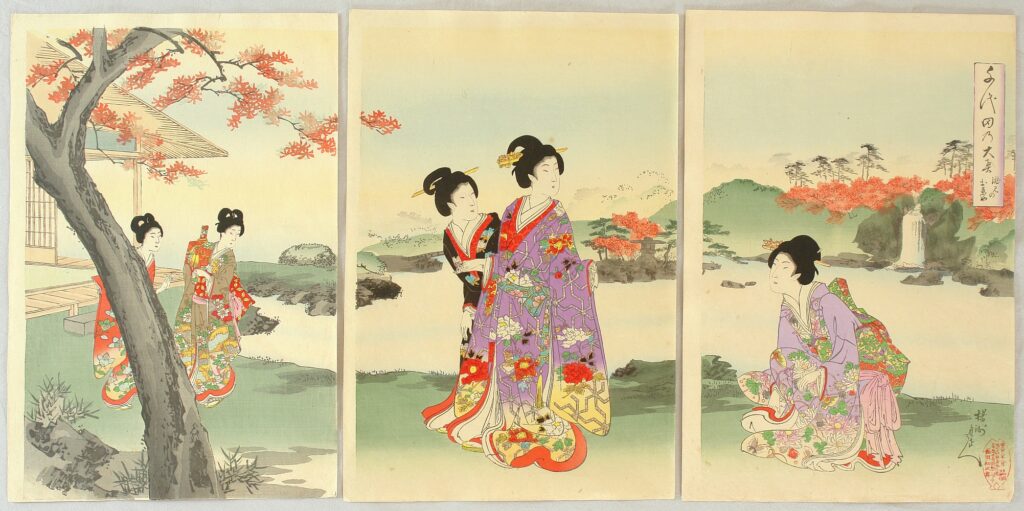
America viewed artworks symbols and decorations that depicted “public virtues” and “principled messages”. These are the qualities that American’s looked for in artwork. American’s view of Japanese people is that they are virtuous and artistic (rightfully so if I may say so myself). Ruskin wrote that the “Gothic style was the culminating manifestation of a society unified by religious faith in which each worker saw his or her contribution as part of the larger vision and thus worked willingly and creatively” (Metrick-Chen 2012, 78). He then went on to say how this blueprint was used in Japanese paintings and Americans absolutely loved it! Combined with media endorsements and the American press giving this Japanese art positive reviews, this type of Japanese art was loved and collected. What about Chinese art?
Chinese art was not loved as much as Japanese art was. The nation was not too hot on China because “the nation legislated their exclusion in 1882” (Metrick-Chen 2012, 78) and Chinese people were “effectively demonized”. Yikes. There was also a “lack of distinction” between Chinese and Japanese art. So what do you think will be bought and hung throughout more homes? Highly publicized and loved Japanese art? Or, similar Chinese art that was not liked nationwide. That’s right, you guessed it, my stick figure drawings. They are simply unmatched!
References
Metrick-Chen, Lenore. Collecting Objects/excluding People : Chinese Subjects and American Visual Culture, 1830-1900. Albany N.Y.: State University of New York Press, 2012.
